


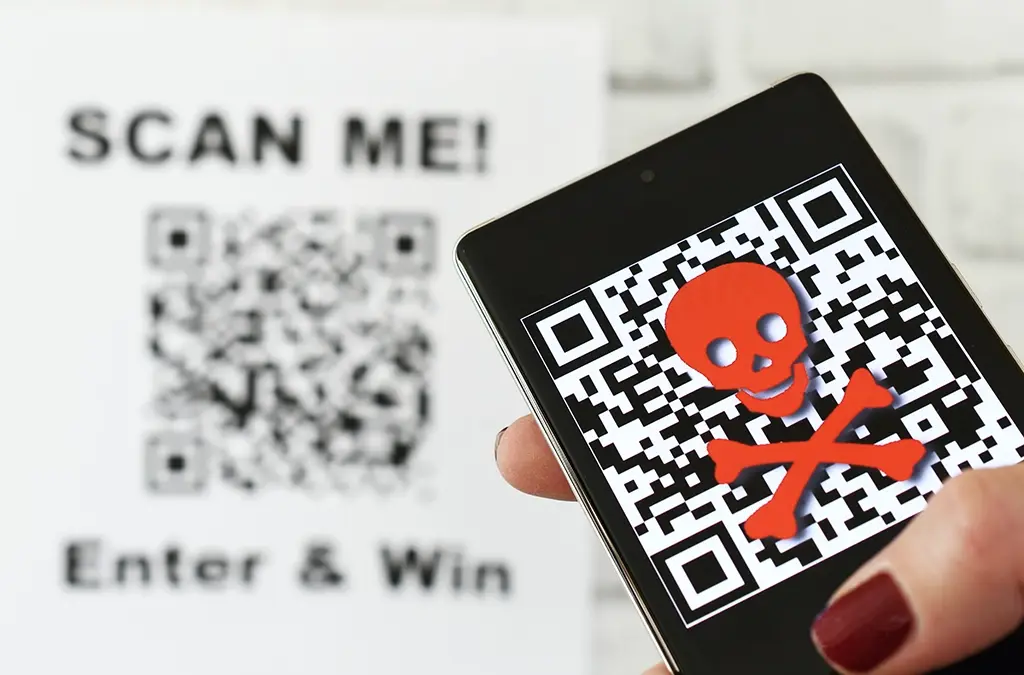
QR codes have become a convenient way to access information, make payments, and complete tasks quickly. But as their popularity grows, so does the risk of fraud. Scammers are exploiting this technology to trick people into revealing personal information or downloading malware, according to the Federal Trade Commission.
How QR Code Scams Work
Fraudsters hide harmful links behind QR codes and place them where you least expect —on parking meters, posters, or even in emails and text messages. They often create a sense of urgency to get you to scan without thinking.
Common tactics include:
- Claiming a package couldn’t be delivered and asking you to reschedule.
- Warning of a problem with your account and urging you to quickly confirm details.
- Alerting you to suspicious activity and prompting a password change.
Once scanned, the QR code may lead to a spoofed website designed to steal your information or infect your device with malware.
How to Protect Yourself
- Inspect the URL before opening it. Look for misspellings or unusual characters.
- Don’t scan unexpected QR codes. Especially if the message pressures you to act immediately.
- Secure your accounts. Use strong passwords and enable multi-factor authentication.
Stay alert and think twice before scanning. A few seconds of caution can save you from a costly scam.
For more information, click here.