


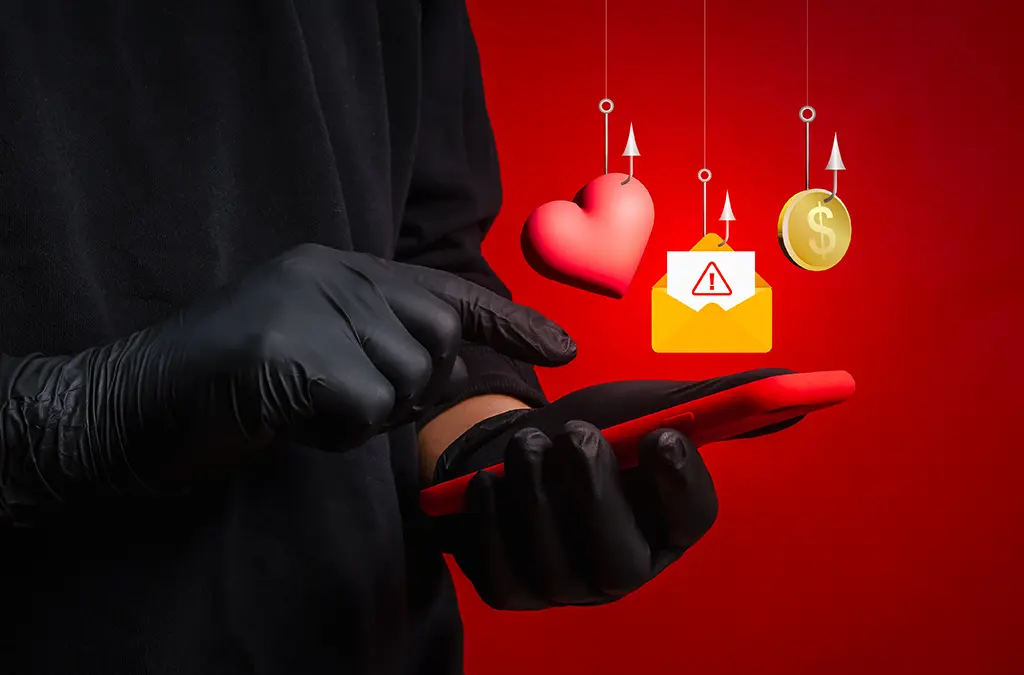
Cryptocurrency scams are becoming more personal and more convincing. According to the Federal Deposit Insurance Company (FDIC) Office of Inspector General, many of these schemes are long-term cons built on trust.
The American Bankers Association (ABA) also notes that scammers often use social media and dating apps to find and research targets.
How It Starts
Scammers usually reach out unexpectedly through texts, social media, or dating apps. According to the ABA, they often pose as successful individuals and quickly try to build a relationship, sometimes even pretending to be someone you know.
How the Scam Unfolds
Once trust is established, the conversation shifts to investing, usually in cryptocurrency. The FDIC Office of Inspector General explains that victims are guided to set up accounts on what appear to be legitimate platforms and are instructed to transfer money.
The ABA highlights that scammers often start small:
- They encourage modest initial investments.
- They may even allow small withdrawals to build confidence.
- Then they push for larger and larger investments, sometimes suggesting loans or “limited-time” opportunities.
Eventually, everything changes. You may be told to pay extra “fees” or “taxes” to withdraw your funds or you may lose access entirely. The scammer then disappears with your money.
Red Flags
Watch for these warning signs highlighted by the FDIC Office of Inspector General and ABA:
- Unexpected messages from strangers
- Quick emotional connection or trust-building
- Promises of high or “guaranteed” returns
- Pressure to act fast
- Requests to send money via crypto or wire transfer
- Trouble withdrawing your money
How to Protect Yourself
- Be skeptical of unsolicited messages.
- Limit what you share online.
- Don’t send money to people you’ve only met online.
- Avoid “exclusive” or high-pressure investment offers.
- Remember: there are no guaranteed returns.
Where to Report a Scam
If you think you’ve been targeted:
- Contact your bank immediately
- File a report with your local police department
- Submit a complaint to the FBI’s IC3: https://www.ic3.gov
- Report to the U.S. Secret Service: cryptofraud@usss.dhs.gov
The ABA emphasizes that reporting quickly can help limit losses and protect others.
Helpful Information for Law Enforcement
If you report a cryptocurrency scam, include as much of the following as possible:
- Cryptocurrency wallet addresses
- Amount lost and type of cryptocurrency
- Dates and times of transactions
- Transaction IDs (hashes)
- How and when you first encountered the scammer
- Copies of emails, texts, or other communications
- Website links, apps, or platforms used
- Cryptocurrency exchanges involved
- A clear timeline of what happened
Providing detailed information can significantly improve efforts to investigate and respond to these crimes.